Persian Terms of Endearment: What Iranians Actually Call Each Other
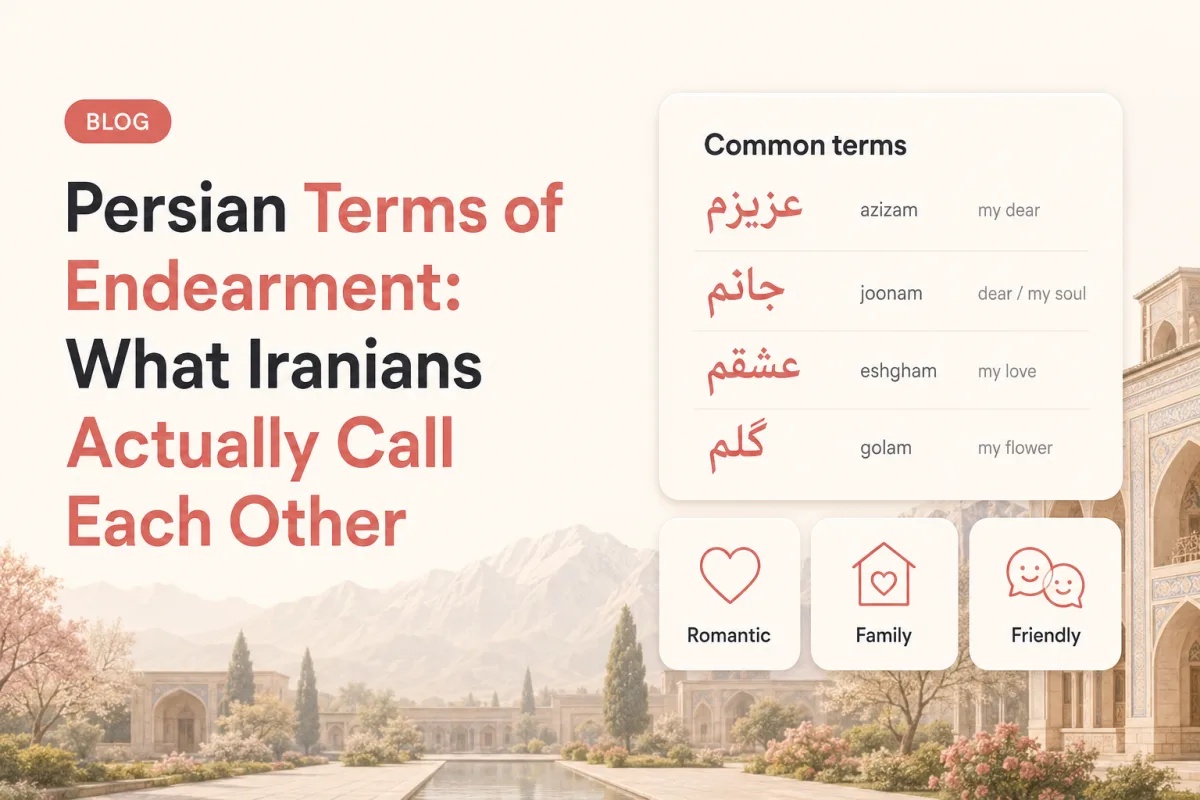
Azizam, joonam, eshgham, nafasam and more — what each Persian term of endearment means, how strong it is, and who you can say it to without it landing wrong.
Iranians Use These Constantly
English speakers reach for a term of endearment now and then. Persian speakers use them in almost every exchange — with partners, parents, children, friends, and often with a shopkeeper they have never met.
That frequency is the thing to understand first. Hearing عزیزم (azizam) from a taxi driver is not flirtation; it is ordinary warmth. Reading the register correctly matters more than memorising the list.
Most of these words are built the same way: a noun plus the ending ـم (-am), meaning "my". Learn that pattern and the whole set opens up at once.
The Everyday Ones
These are safe with almost anyone you are on friendly terms with.
| Persian | Sounds like | Literally | Used for |
|---|---|---|---|
| عزیزم | azizam | my dear | anyone — the workhorse |
| جانم | janam | my soul | anyone, and also "yes?" |
| گلم | golam | my flower | warm, slightly playful |
| قربونت برم | ghorboonet beram | may I be sacrificed for you | thanks, affection, exasperation |
جانم does double duty and surprises every learner: when someone calls your name, the standard reply is جانم. Where English says "yes?", Persian says "my soul". More on janam.
قربونت برم sounds alarming translated literally, and nobody means it literally. It functions closer to "you're too good to me".
The Romantic Ones
These carry weight. Said to a friend, they would be misread.
| Persian | Sounds like | Literally | Strength |
|---|---|---|---|
| عشقم | eshgham | my love | everyday between couples |
| نفسم | nafasam | my breath | intense, poetic |
| دلم | delam | my heart | tender |
| عمرم | omram | my life | strong |
عشقم is the one couples use most, roughly as often as English speakers say "babe". نفسم is a level up — the sense is that the person is as necessary as breathing.
Saying I Love You
Two phrases, and the difference between them matters.
دوستت دارم (dooset daram) is the standard "I love you". Literally it means "I hold you as a friend", and it works for partners, parents, children and close friends alike. Add خیلی (kheyli) for خیلی دوستت دارم, "I love you very much".
عاشقتم (asheghetam) means "I am in love with you". Romantic only. Saying it to a parent or a friend would sound wrong in a way that is hard to recover from.
If you are unsure which fits, دوستت دارم is always safe. Full detail on dooset daram and asheghetam.
Talking to Children
Persian has a particular tenderness reserved for children, and Iranian families use it heavily.
- عزیزم (azizam) — the default for a child
- جیگرم (jigaram) — literally "my liver", which sounds startling in English but is deeply affectionate in Persian
- قند عسل (ghand asal) — "sugar honey", said to small children
- نفسم (nafasam) — a parent to a young child, as much as a partner
جیگر as a term of affection is worth knowing because it appears constantly and translates terribly. Persian treats the liver, not the heart, as the seat of deep feeling.
Getting the Register Right
The mistake learners make is not choosing the wrong word — it is misjudging how strong it is.
A rough scale, gentlest first:
- عزیزم, جانم, گلم — warm, safe with anyone
- دوستت دارم — sincere, fine with family and friends
- عشقم, دلم — romantic, for partners
- نفسم, عمرم, عاشقتم — intense, for partners at moments that matter
When in doubt, step down a level. Persian speakers will read warmth generously; over-shooting is what creates awkwardness.
Build these into real sentences with our free Farsi lessons, or browse the whole set of Persian love words.