
Persian Poetry
Rumi, Hafez, Saadi, in their own words
Persian poetry is one of the most loved in the world. You don't need a degree to start, just one line, one meaning, one moment of wonder.
The poets shaped the language
Persian children grow up reciting Hafez. Iranian families open his book on New Year and read a verse aloud as a fortune. Lines from Saadi are carved into the walls of the United Nations. Rumi is, by some counts, the most read poet on Earth.
None of this is reserved for scholars. Persian poetry lives in everyday speech, in greetings, in jokes, in the way someone says goodnight. Learning a few lines opens a door to the culture that English translation can never quite carry.
Famous Persian poetry, simply explained
One line, one poet, one meaning. The full deck has twelve.
“Listen to the reed, see how it tells a story”
بشنو از نی چون حکایت میکند
beshno az ney chon hekaayat mikonad
— Rumi
“If that Turk of Shiraz takes my heart in hand”
اگر آن ترک شیرازی به دست آرد دل ما را
agar aan torke shiraazi be dast aarad dele maa raa
— Hafez
“Human beings are members of one body”
بنی آدم اعضای یک پیکرند
bani aadam a'zaaye yek peykarand
— Saadi
“Let me sit with you under the plane tree”
بنشینم با تو زیر چنار
beneshinam baa to zire chenaar
— Rumi
“What does virtue have to do with me, a ruined soul”
صلاح کار کجا و من خراب کجا
salaahe kaar kojaa-o man kharaab kojaa
— Hafez
“What you saw still stands. What you said was wind”
آنچه دیدی برقرار و آنچه گفتی باد بود
aanche didi bar gharaar va aanche gofti baad bood
— Saadi
Five Voices, One Thousand Years
The five poets behind the lines in this game span roughly a thousand years of Persian writing. Different cities, different eras, the same language.

Rumi (مولانا)
1207–1273
Sufi mystic from Balkh; the Masnavi is one of the most influential poems ever written, and Rumi is, by some counts, the most read poet on Earth.
Imaginary portrait by Hossein Behzad
Read on Wikipedia →
Hafez (حافظ)
c. 1325–1390
Shirazi master of the ghazal. The poet Iranians turn to in joy and trouble alike — most households keep a copy of his Divan for fortune-telling.
Posthumous portrait by Anselm Feuerbach, 1852
Read on Wikipedia →
Saadi (سعدی)
c. 1210–1291
Author of the Gulistan and Bustan. His line on human solidarity is inscribed at the United Nations — quiet, ethical, still quoted daily.
Imaginary depiction by Hossein Behzad
Read on Wikipedia →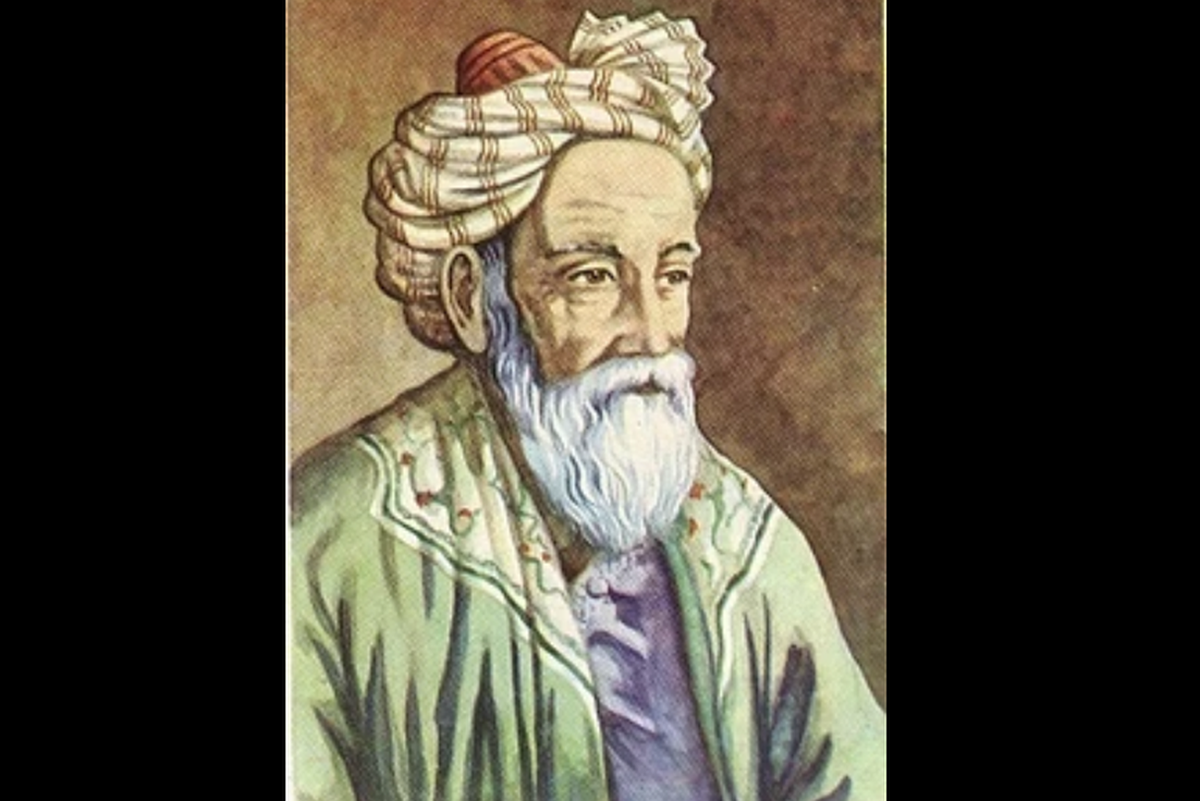
Khayyam (خیام)
1048–1131
Mathematician, astronomer, and poet from Nishapur. The Rubaiyat is his most famous work, short defiant meditations on impermanence and the present.
Portrait of Omar Khayyam
Read on Wikipedia →
Ferdowsi (فردوسی)
c. 940–1019
Author of the Shahnameh, the 50,000-verse Persian Book of Kings. Every Iranian schoolchild can recite his line on knowledge as power.
15th-century manuscript depiction
Read on Wikipedia →Portraits courtesy of Wikimedia Commons.
Three gentle ways in
Pick one line
Choose a single line that resonates. این نیز بگذرد (in niz bogzarad), "this too shall pass" is a kind first one.
Read it aloud
Persian is meant to be heard. Read the phonetic three times. Don't worry about a perfect accent, the rhythm is the point.
Sit with the meaning
Persian poetry rewards quiet attention. Read it in the morning, again at night. The line will start to feel like yours.
Read Hafez in the original
The translations are good. The originals are unreal. Free first lesson, no signup, learn the alphabet behind the verse.
Start Free Lessons →