Nowruz Explained: Persian New Year & Its Meaning
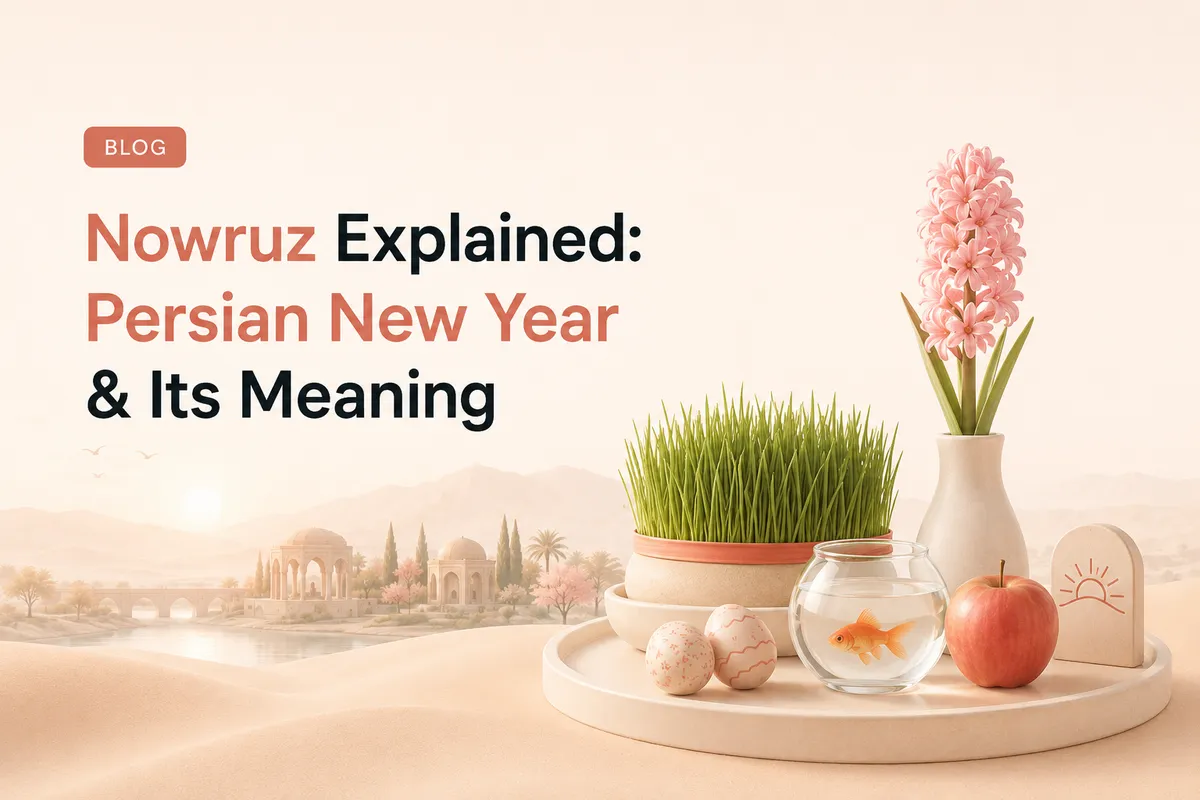
Everything you need to know about Nowruz, the Persian New Year. Learn about its 3,000-year history, the Haft-seen table, traditions, and how it's celebrated worldwide.
What Is Nowruz?
Nowruz (نوروز) literally means "new day" in Farsi. It marks the first day of spring and the beginning of the Iranian calendar year. Celebrated on the spring equinox — usually March 20 or 21 — Nowruz is one of the oldest holidays in the world, with roots going back over 3,000 years to ancient Persia and the Zoroastrian tradition.
Today, Nowruz is celebrated by over 300 million people across Iran, Afghanistan, Tajikistan, Kurdistan, and many other regions. In 2010, the United Nations officially recognized Nowruz as an International Day, honoring its cultural significance.
Unlike many holidays tied to a specific religion, Nowruz is a secular celebration of nature, renewal, and togetherness. It's a time for families to gather, homes to be cleaned, and fresh starts to be made.
The History of Nowruz
Nowruz dates back to the Achaemenid Empire (550–330 BCE), though some scholars believe the celebration is even older. The holiday is deeply connected to Zoroastrianism, the ancient Persian religion that emphasized the battle between light and darkness.
The spring equinox — the moment when day and night are equal — symbolized the triumph of light over darkness. This made it the perfect moment to mark a new beginning.
King Cyrus the Great is often credited with formalizing Nowruz celebrations at Persepolis, the grand ceremonial capital of the empire. Carvings at Persepolis show delegations from across the empire bringing gifts for the New Year — evidence of just how important this holiday was.
Despite the many empires and rulers that have come and gone, Nowruz has survived. The Arab conquest, the Mongol invasion, and the Islamic Revolution — none could erase this deeply rooted tradition. Today it remains the most important holiday in Iranian culture.
The Haft-seen Table
The centerpiece of every Nowruz celebration is the Haft-seen (هفتسین), a table set with seven items that all start with the letter "seen" (س) in Farsi. Each item carries a symbolic meaning:
🍎 Seeb (سیب), Apples, representing beauty and health
🧄 Seer (سیر), Garlic, representing good health and medicine
🌿 Serkeh (سرکه), Vinegar, representing patience and age
🌷 Sonbol (سنبل), Hyacinth flowers, representing the arrival of spring
🍯 Samanu (سمنو), A sweet wheat pudding, representing fertility and wealth
🌱 Sabzeh (سبزه), Wheat or lentil sprouts, representing rebirth and renewal
🪙 Sekeh (سکه), Coins, representing prosperity and wealth
Families often add other meaningful items to the table: a mirror (reflecting on the past), candles (light and happiness), painted eggs (fertility), a book of poetry by Hafez (wisdom), and goldfish (life). The Haft-seen is set up days before Nowruz and remains in place for 13 days.
How Nowruz Is Celebrated
Nowruz celebrations span about two weeks and include several distinct traditions:
Khaneh Tekani (خانهتکانی), Spring Cleaning In the weeks before Nowruz, families thoroughly clean their homes from top to bottom. This isn't just practical — it symbolizes sweeping away the old year and making space for fresh energy.
Chaharshanbe Suri (چهارشنبهسوری), Fire Festival On the last Tuesday night before Nowruz, people jump over bonfires while chanting "Zardi-ye man az to, sorkhi-ye to az man" (Give me your redness, take my paleness). Fire represents light overcoming darkness.
Sal Tahvil (سال تحویل), The Exact Moment Families gather around the Haft-seen table at the exact moment of the spring equinox. This is the official start of the new year. Elders give gifts (often money in crisp bills) to younger family members.
Visiting Family (دید و بازدید) The first days of Nowruz are spent visiting relatives, starting with the eldest family members. Guests are served tea, sweets, nuts, and fruits.
Sizdah Bedar (سیزدهبدر), Nature Day On the 13th day of the new year, everyone heads outdoors for picnics. The sabzeh (sprouts) from the Haft-seen are thrown into running water, symbolizing the release of bad luck. It's a joyful day spent in nature with family and friends.
Nowruz Food and Sweets
Food plays a central role in Nowruz celebrations. Some traditional dishes include:
Sabzi Polo ba Mahi (سبزیپلو با ماهی), Herbed rice with fish, the classic Nowruz Eve dinner. The herbs represent freshness, and the fish represents life.
Kuku Sabzi (کوکو سبزی), A thick herb frittata packed with fresh herbs, symbolizing the green of spring.
Reshteh Polo (رشتهپلو), Rice with noodles, symbolizing the threads of fate and good fortune.
Ajeel (آجیل), A festive mix of nuts, seeds, and dried fruits served to guests.
Baklava and Noghl (باقلوا و نقل), Sweet pastries and sugar-coated almonds, because sweetness should mark the new year.
Every family has their own variations and recipes passed down through generations. The key is abundance — tables overflow with food to symbolize the hope for prosperity in the coming year.
Nowruz Around the World
While Nowruz originated in Persia, it has spread far beyond Iran's borders:
Afghanistan, Known as Nawroz, it's a national holiday featuring buzkashi (a horseback sport) and special foods like haft mewa (seven-fruit compote).
Tajikistan, Celebrations include sumalak (similar to samanu), traditional music, and community feasts.
Kurdistan, Newroz is deeply important to Kurdish identity. Celebrations often feature large bonfires and traditional dancing.
Azerbaijan, Novruz is a major national holiday with elaborate Haft-seen tables and public festivals.
Central Asia, Countries like Uzbekistan, Kazakhstan, and Turkmenistan celebrate with their own regional variations.
The Diaspora, Iranian and Persian-speaking communities worldwide celebrate Nowruz, from Los Angeles to London to Sydney. Major cities often host public Nowruz festivals and events.
Key Farsi Words for Nowruz
Learning some Nowruz vocabulary is a wonderful way to connect with the holiday:
- نوروز (Nowruz), New day / New Year
- عید (Eyd), Holiday / celebration
- سال نو مبارک (Sal-e no mobarak), Happy New Year!
- هفتسین (Haft-seen), The seven S's table
- سبزه (Sabzeh), Sprouts
- بهار (Bahar), Spring
- خانهتکانی (Khaneh tekani), Spring cleaning
- سال تحویل (Sal tahvil), The turning of the year
- عیدی (Eydi), New Year's gift (usually money)
- سیزدهبدر (Sizdah bedar), The 13th day outdoor celebration
Want to learn more Farsi vocabulary? Start with our free lessons on Learn Farsi — we cover everyday words, grammar, and the Persian alphabet.
Why Nowruz Matters
In a world that often feels divided, Nowruz is a reminder of what unites us. It celebrates nature, family, generosity, and hope. It doesn't belong to any one religion or nation — it belongs to anyone who believes in fresh starts.
Whether you're Persian or just curious about the culture, Nowruz is an invitation to pause, reflect on the past year, and step forward with optimism. As Iranians say:
سال نو مبارک, Sal-e no mobarak! Happy New Year!